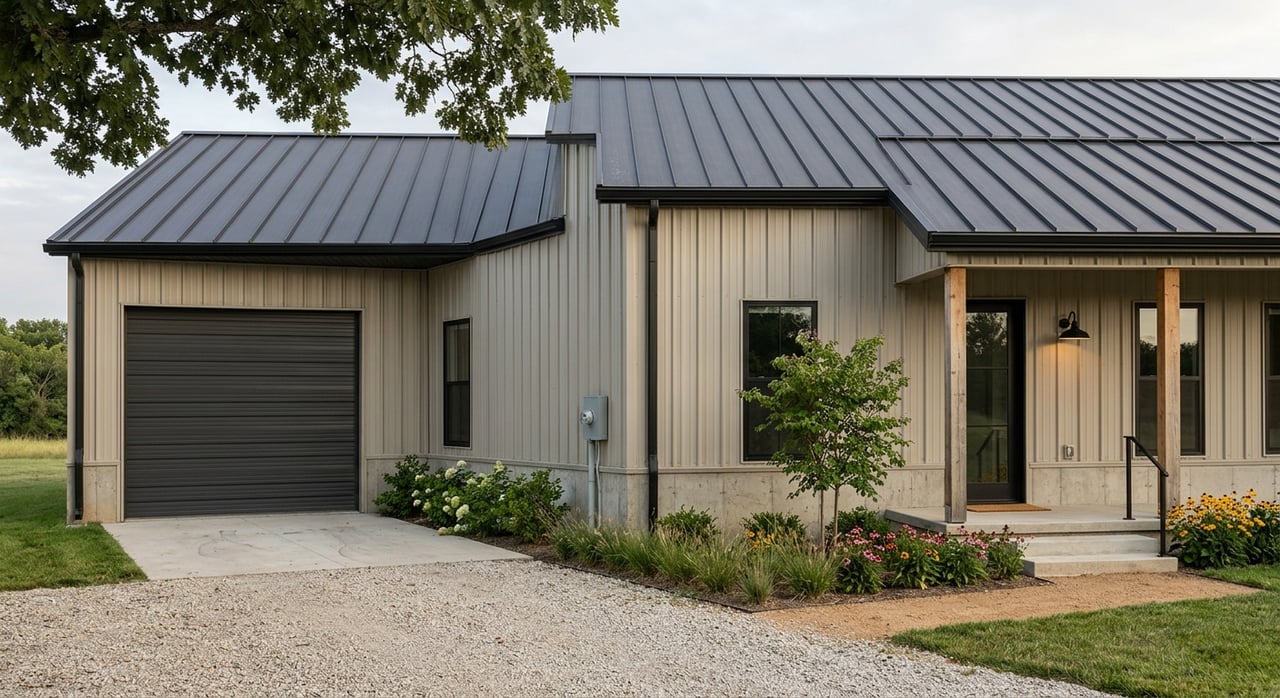
Planning A Barndominium Build Near Licking
July 2, 2026
July 2, 2026
Thinking about building a barndominium near Licking? The land can look straightforward at first glance, but rural builds often come down to a few make-or-break details long before construction starts. If you want to avoid surprises, it helps to understand how acreage, access, septic, utilities, and financing can shape the project from day one. Let’s dive in.
One of the first questions to answer is whether the parcel is inside Licking city limits or in unincorporated Texas County. That matters because Licking’s subdivision rules apply within the city’s corporate limits.
Within the city, land development rules can apply to utility extension, subdivision, and parceling for nonagricultural purposes that require street access and public utilities. The city code also says lots cannot be sold and no plat can be recorded until approval is completed through the planning commission and board of aldermen.
If the property is outside city limits, the process may feel different. Texas County’s state building-code table shows no adopted county energy or residential code, so rural due diligence usually centers more on plat status, road access, septic feasibility, and utility availability.
Land near Licking tends to be acreage-oriented. Recent listing snapshots in the area have included parcels around 15.8 acres, 18.66 acres, 25 acres, and 45.6 acres, which suggests buyers often look at larger tracts rather than small build-ready lots.
For a barndominium build, acreage is not just about privacy or elbow room. It also affects septic options, future flexibility, and how easily you may be able to add improvements later.
A practical starting point is 3 acres. The Texas County Health Department says a single-family residence on 3 acres or more has been exempt from the county’s on-site sewage permit requirement since 1996, although the soils process still matters.
If you want more flexibility, 10 acres can be a useful threshold. The county says multiple residences need 10 acres in the aggregate per residence and 360 feet of separation to stay exempt, so larger tracts may give you more room to plan for future use.
For many rural properties near Licking, septic feasibility is one of the biggest early questions. The Texas County Health Department says the first step is a soils morphology report.
That report helps determine whether a conventional septic system will work on the site. If it will not, the county says an engineer-designed alternative system or lagoon may be needed.
This is why two parcels with similar acreage can have very different build costs. On paper, both may look like good barndominium sites, but soil conditions can change the path forward in a big way.
Before you make an offer, ask who will handle the soils work and what the backup plan is if a standard septic system is not feasible. Getting clarity early can save time, money, and frustration later.
Access is one of the most overlooked parts of buying rural land. A parcel may look perfect online, but the real question is how you legally and practically get to it.
In rural Texas County, township boards maintain roads and bridges. The county recorder also records deeds, surveys, plats, easements, and restrictions or covenants, which makes title and access review a key part of due diligence.
Before moving forward, ask specific questions:
These details can affect not only your day-to-day use but also lender approval, utility work, and future resale.
Utilities are another area where rural builds can get complicated fast. Licking does have public water and wastewater infrastructure on record with the Missouri Department of Natural Resources, including public water system permitting, wastewater plant improvement permitting, and a 2025 funding award for water distribution upgrades.
Still, not every parcel near Licking will have simple access to public service. If public sewer is not accessible, Licking’s subdivision ordinance says proper sanitary waste disposal approved by the Missouri Department of Natural Resources is required.
Electric planning matters too. Intercounty Electric Cooperative is headquartered in Licking, and its member handbook tells customers to call 811 before digging.
A smart pre-offer utility checklist includes:
Even when land is attractively priced, utility extension and site work can add meaningful time and cost to the build.
Buying land and building a home is different from buying an existing house. Construction financing usually works on a separate timeline and structure.
Construction loans are typically short-term and often have higher interest rates than longer-term mortgages. Funds are usually released in draws as work progresses, which means your lender will want documentation throughout the project.
Some buyers use construction-to-permanent financing. This can be set up as a one-close or two-close transaction, and some structures may allow financing for both the lot and the residence.
For single-close financing, the timing can be tighter. Completion paperwork is typically needed before the loan converts, including an appraisal update or completion report and, where applicable, a certificate of occupancy.
That is why it helps to work with a lender who is comfortable with land-and-build transactions, not just standard home purchases.
A good rural land purchase starts with the right questions. The goal is to learn what you are really buying before you commit.
When you are budgeting for a barndominium build, it is easy to focus only on land price, site work, and construction costs. But property taxes can change after the home is built.
The Texas County Assessor says new construction is one of the common reasons parcel values change. In simple terms, you should not expect land-only taxes to stay the same once improvements are added.
Planning for that reassessment now can help you set a more realistic long-term budget. It is one more reason to look at the full ownership picture, not just the purchase price.
The best barndominium sites near Licking are not always the ones that look easiest at first glance. Often, the strongest opportunities are the parcels where the key details have been checked early and the path to building is clear.
In this market, the big variables are usually jurisdiction, acreage, septic feasibility, road access, utility availability, and loan structure. When those pieces line up, your project can move forward with a lot more confidence.
If you are looking at land near Licking and want help sorting through acreage, access, and build-readiness, The Closers Real Estate Team can help you evaluate the moving parts before you buy.
Stay up to date on the latest real estate trends.

buyer
with Paige Fairbairn
buyer
with Paige Fairbairn
buyer
with Jenna Davis
acreage
with Sasha Spachmann
acreage
with Tina Nash
Get assistance in determining current property value, crafting a competitive offer, writing and negotiating a contract, and much more. Contact us today.